
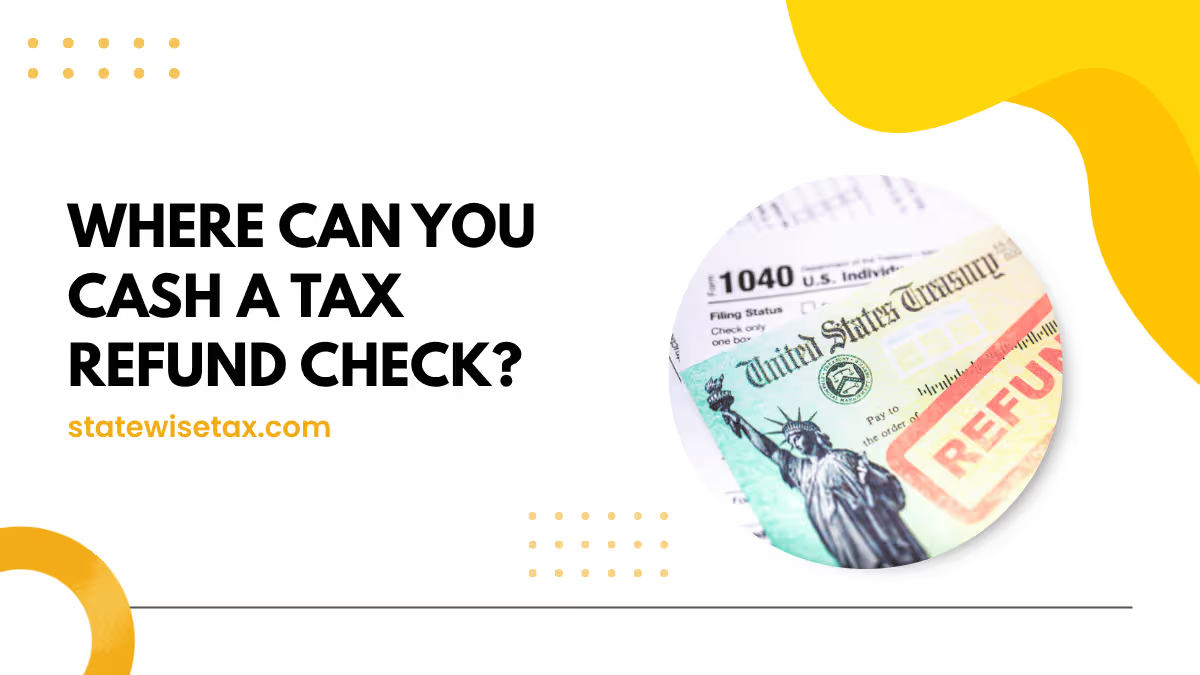

If you are asking where can you cash a tax refund check, the answer depends on the type of refund check, your identification, the institution’s policies, and whether you already have a bank account. A federal tax refund check is generally a U.S. Treasury check, and many banks, credit unions, and check-cashing businesses may accept it under their own rules.
For many taxpayers, the easiest option is to deposit the check into a bank or credit union account. If you do not have an account, you may still have options. Some banks may cash government checks for noncustomers, while check-cashing businesses may cash them for a fee.
Also Read: Can I File My State Taxes Separately?
There is also an important change to know in 2026. The federal government began phasing out paper checks for most federal payments on September 30, 2025. The IRS generally stopped issuing paper refund checks to individual taxpayers after that date, except in limited situations. Most federal tax refunds are now sent electronically.
Where Can You Cash a Tax Refund Check?
You can usually cash a tax refund check at your bank, credit union, or a check-cashing business that accepts government checks. Some retailers may also provide check-cashing services. Bring valid identification and expect fees or limits if you use a service where you are not an account holder.
Places to Get Your Money for a Tax Refund Check?
The most common places include:
- Your bank: Your bank may cash or deposit the refund check. Customers often receive better terms than noncustomers.
- A credit union: A credit union may cash a Treasury refund check for members and may have rules for nonmembers.
- A check-cashing business: These businesses often cash government checks but usually charge a fee.
- The bank that issued the check: The financial institution named on the check may offer check-cashing services, but it can set its own requirements and fees.
- Some retail stores: Certain retailers offer check-cashing services. Availability, check types, limits, and fees vary by location.
- A prepaid account or card provider: Some financial products allow government payments through electronic deposits, but this does not mean they will cash a paper check.
The best first option is usually your own bank or credit union. Depositing the check may also avoid the fees charged by check-cashing businesses.
What Is a Tax Refund Check?
A federal tax refund check is a payment issued after the IRS determines that you are entitled to receive money back. The refund can result from federal income tax withholding, estimated tax payments, refundable credits, or other amounts paid toward your federal tax liability.
A paper federal refund check is generally issued by the U.S. Treasury.
The check normally includes important details such as:
- Your name
- The payment amount
- The date of issue
- The paying agency
- Check information
- Treasury payment markings
- Endorsement instructions
Read the check before attempting to cash it. If the name is incorrect, the amount looks wrong, or you believe the refund was issued in error, contact the IRS before cashing it.
Can You Cash a Tax Refund Check at Your Bank?
Yes, many banks allow customers to cash or deposit government checks. The exact policy depends on the bank.
If you have an active checking or savings account, depositing the check is often the simplest option. Your bank may place a hold before all funds become available.
A bank may ask for:
- Government-issued photo identification
- Your bank card
- Your account information
- The original tax refund check
Some banks may require you to deposit the check instead of receiving cash immediately.
Banks can also impose limits on check-cashing services. A bank may refuse to cash a check for a noncustomer, charge a fee, or require additional verification.
Can You Cash a Tax Refund Check Without a Bank Account?
Yes, you may have options even without a bank account.
If you are researching where can you cash a tax refund check without a bank account, start by checking local banks, credit unions, and licensed check-cashing businesses.
A check-cashing company may accept a Treasury check after verifying your identity. You will usually pay a fee, and the fee can depend on the check amount and the company’s pricing rules.
You should ask these questions before handing over the check:
- Do you cash federal Treasury checks?
- What identification do you require?
- How much is the fee?
- Is there a maximum check amount?
- Will you receive the full amount in cash?
- Are there additional service charges?
Compare the total cost before choosing a service.
Can a Bank Cash a Treasury Tax Refund Check?
A federal tax refund check is generally a Treasury payment. Banks can set their own policies for handling Treasury checks.
If you are an account holder, the bank may allow you to deposit the check into your account. It may also provide cash based on its check-cashing policy.
If you are not a customer, the bank may refuse to cash the check. Some banks provide check-cashing services to noncustomers for a fee, while others do not.
Do not assume that every branch of the same bank follows identical procedures. Local branch policies can affect the service available to you.
Can You Cash a Tax Refund Check at Walmart?
Some Walmart locations offer check-cashing services through their financial services operations, but availability and eligibility can vary by location and current company policy.
A tax refund check may fall under government check services where available. However, you should check the current rules at your local store before visiting.
Bring acceptable identification and the original check.
Do not rely on a retailer as your only option. Check your bank or credit union first because depositing the check may cost less.
Can You Cash a Tax Refund Check at a Grocery Store?
Some grocery stores provide check-cashing services, but not every location accepts federal tax refund checks.
Rules can vary based on:
- Store location
- Check type
- Check amount
- Identification requirements
- Customer status
- Local policies
- Service availability
Call the store before making a trip. Ask specifically if it accepts U.S. Treasury checks issued for federal tax refunds.
Can You Cash a Tax Refund Check at a Check-Cashing Store?
Yes. Many check-cashing businesses accept government checks, including certain Treasury checks.
This option can help people who do not have bank accounts. The main drawback is the fee.
Before using a check-cashing business, calculate how much money you will actually receive.
For example:
| Refund Check | Service Fee | Amount You Receive |
|---|---|---|
| $500 | $10 | $490 |
| $1,000 | $20 | $980 |
| $2,500 | $50 | $2,450 |
| $5,000 | $100 | $4,900 |
These figures are examples only. Actual fees vary by company, state, check amount, and service.
A higher fee can reduce a large refund by a significant amount.
What Identification Do You Need to Cash a Tax Refund Check?
Most financial institutions and check-cashing services require identification.
Common forms include:
- State-issued driver’s license
- State identification card
- U.S. passport
- Other accepted government-issued identification
The name on your identification generally needs to match the payee name on the check.
A business may ask for additional information before completing the transaction.
If your identification is expired, damaged, or does not match the check, the institution may refuse the transaction.
What If Your Name Is Different on the Check?
Do not try to alter the check yourself.
If your legal name has changed, the financial institution may request documents showing the name change. The institution can decide what documents it will accept.
If the name on the refund check is incorrect because of an IRS record issue, contact the IRS for assistance.
Never change the payee name, amount, date, or other information on a government check.
Can Someone Else Cash Your Tax Refund Check?
Generally, you should not expect another person to cash your federal tax refund check for you.
A tax refund check is issued to the taxpayer named on the payment. Banks and check-cashing businesses use identification and endorsement rules to prevent unauthorized transactions.
If you have a joint tax return, both spouses may be named on the refund check. Financial institutions can have specific rules for joint checks.
Do not sign your check over to another person unless the financial institution confirms that it accepts that type of endorsement.
What If You Have a Joint Tax Refund Check?
Joint refund checks can create additional requirements.
If the check is payable to two people, the bank may require both individuals to be present. It may also require both signatures.
For example, a check payable to two spouses may need both spouses to endorse it before the bank accepts it.
The safest step is to contact the institution before visiting the branch.
Ask:
- Are both payees required to appear?
- Does the bank require both signatures?
- What identification must each person provide?
- Can the check be deposited into one account?
- Will the bank place a hold on the funds?
How Long Do You Have to Cash a Tax Refund Check?
Do not wait unnecessarily to cash or deposit a tax refund check.
Treasury checks have validity rules, and an older check can create problems if it is presented after its stated validity period.
Older IRS guidance states that tax refund checks generally expire after 12 months from the date of issue. If a check has expired, you may need to request a replacement from the IRS.
Check the wording printed on your specific check. If the check is close to its expiration date, act promptly.
Must Read: What Happens If I Claim Exempt on One Paycheck?
What Happens If Your Tax Refund Check Is Lost?
Contact the IRS if you lose a federal tax refund check.
The IRS can conduct a refund trace to determine what happened to the payment. The process can help establish if the check was cashed.
For eligible refund issues, taxpayers can use IRS refund tools, contact the IRS, or submit Form 3911 when appropriate.
If the check was stolen, report the situation promptly. Do not wait several months before taking action.
What If the Tax Refund Check Was Already Cashed?
If you believe someone else cashed your refund check, contact the IRS.
The IRS can initiate a refund trace. The agency may investigate the payment and provide information about the payment process.
A taxpayer may also need to provide information about the missing or disputed refund.
Do not attempt to cash another replacement check if the original payment has already been processed without first contacting the IRS.
Can You Cash a Tax Refund Check at a Check-Cashing Store With No Bank Account?
Yes, a check-cashing business may provide this service.
This is one of the main alternatives for people who do not use traditional bank accounts.
However, compare the cost first.
A check-cashing business can charge:
- A flat fee
- A percentage of the check amount
- A combination of fees
- Additional fees for certain services
The fee can vary by state and provider.
If your refund is large, even a small percentage can result in a substantial charge.
Is It Better to Cash or Deposit a Tax Refund Check?
For many taxpayers, depositing the check is the better choice.
Depositing the check into your own bank account can reduce or eliminate check-cashing fees. It also leaves a transaction record.
Consider these factors:
| Option | Main Benefit | Main Concern |
|---|---|---|
| Bank deposit | Usually low cost | Funds may be subject to a hold |
| Bank cashing | Immediate access may be possible | Bank may have restrictions |
| Credit union | May offer low-cost service | Membership rules may apply |
| Check-cashing store | Useful without a bank account | Fees can be high |
| Retailer | Convenient in some locations | Services vary |
| Prepaid account | Can provide electronic access | Account terms and fees vary |
If you do not have a bank account, consider opening an account at a bank or credit union that meets your needs. A low-cost account can reduce the need for check-cashing services.
Important 2026 Change: Federal Paper Refund Checks Are Being Phased Out
The answer to where can you cash a tax refund check is becoming less important for many taxpayers because federal paper payments are being phased out.
The IRS and U.S. Treasury began the transition on September 30, 2025. Under Executive Order 14247, the federal government generally stopped issuing paper checks for federal payments after that date, subject to exceptions.
For individual taxpayers, the IRS generally stopped issuing paper refund checks after September 30, 2025.
Most refunds are now sent through electronic methods.
The IRS has stated that taxpayers without traditional bank accounts can still receive refunds through approved electronic alternatives, including certain prepaid debit cards and mobile payment options. Limited exceptions to paper checks also exist.
This change does not eliminate the need to know where can you cash a tax refund check because some taxpayers may still receive paper checks under an exception or because of payment circumstances.
Why Did the IRS Reduce Paper Refund Checks?
The federal government cited security, cost, and processing concerns when announcing the move toward electronic payments.
Paper checks can be:
- Lost
- Stolen
- Altered
- Delayed
- Returned as undeliverable
Electronic payments can also reach taxpayers faster in many situations.
The IRS reported that most individual refunds were already being issued through direct deposit before the paper-check phaseout.
For taxpayers who can use electronic payments, direct deposit generally remains the preferred method for receiving a federal refund.
What Should You Do If You Receive a Paper Tax Refund Check in 2026?
If you receive a paper refund check, first verify the details.
Check:
- Your name
- Refund amount
- Issue date
- Paying agency
- Check number
- Endorsement area
If everything appears correct, contact your bank or credit union first.
If you do not have an account, check licensed local check-cashing services and ask about Treasury check acceptance and fees.
If something looks wrong, contact the IRS before cashing the check.
Can You Deposit a Tax Refund Check Into a Prepaid Card?
Some prepaid cards and financial apps provide account and routing numbers that can receive electronic government payments.
That is different from cashing a paper check.
A prepaid card provider may offer a check-deposit feature through its mobile application, but eligibility depends on the provider’s rules. Fees and processing times can also vary.
Read the account terms before depositing a large refund.
What If Your Bank Refuses to Cash Your Tax Refund Check?
A bank can have policies that limit or prohibit check-cashing services.
If your bank refuses to cash the check, ask if you can deposit it instead.
If you do not have an account, ask another local bank or credit union if it accepts Treasury checks from noncustomers.
You can also compare licensed check-cashing services.
Do not pay a high fee without first checking other options.
How to Find a Safe Place to Cash Your Refund
When searching where can you cash a tax refund check, focus on regulated and established financial service providers.
Use these steps:
- Call before visiting: Confirm that the location accepts federal Treasury checks.
- Ask for the full fee: Get the exact dollar amount or percentage before the transaction.
- Check identification rules: Make sure your ID meets the provider’s requirements.
- Confirm the check limit: Some services have maximum amounts.
- Keep your receipt: Save proof of the transaction.
- Protect the check: Do not sign the check until you are ready to complete the transaction.
- Avoid unofficial buyers: Do not hand the check to an unknown person offering cash.
What You Should Not Do With a Tax Refund Check
A tax refund check represents real money, but treating it like cash before it is verified can create problems.
Avoid these actions:
- Do not change the amount.
- Do not change the payee name.
- Do not sign the check before you know where you will cash or deposit it.
- Do not give the check to an unknown person.
- Do not pay an unusually high fee without comparing alternatives.
- Do not cash a refund that you know was issued in error.
- Do not discard the receipt after cashing it.
- Do not ignore an expired check.
If you believe the IRS sent you money you were not entitled to receive, contact the IRS before using the funds.
What If the IRS Sent the Wrong Refund Amount?
Sometimes the IRS changes a refund amount after reviewing a return.
If you receive more money than you expected, do not assume the extra amount is yours to spend.
The IRS may send a notice explaining an adjustment.
If you receive an erroneous refund, special procedures apply. For an uncached erroneous paper refund check, the IRS instructs taxpayers to write “Void” in the endorsement area and return the check promptly using the applicable IRS instructions.
Cashing an erroneous refund can create additional problems, including possible interest.
Federal Refund Checks vs. State Tax Refund Checks
The answer to where can you cash a tax refund check can differ between federal and state refunds.
A federal refund generally comes from the U.S. Treasury. A state refund comes from the state tax agency or another state payment system.
Banks and check-cashing companies may treat them differently.
| Refund Type | Issuing Authority | Common Cashing Options |
|---|---|---|
| Federal income tax refund | U.S. Treasury | Banks, credit unions, check-cashing services |
| State income tax refund | State government | Banks, credit unions, check-cashing services |
| Local tax refund | Local authority | Depends on issuing agency |
| Amended return refund | IRS or state agency | Depends on payment method |
Always check the issuing agency and the exact payment instructions on the check.
Does Cashing a Tax Refund Check Cost Money?
It can.
Your own bank may cash or deposit the check at no charge, but policies vary.
A check-cashing company generally charges for the service. The amount may depend on the check’s value and the provider’s fee structure.
For a $5,000 refund, even a 2% fee would cost $100. A 3% fee would cost $150.
That is why taxpayers should compare fees before cashing a large check.
What Is the Safest Option for a Tax Refund?
For taxpayers who have a bank or credit union account, depositing the refund into that account is often the simplest option.
It creates a clear record and may avoid check-cashing fees.
For people without an account, a reputable bank, credit union, or licensed check-cashing provider can be an alternative.
As federal payments move toward electronic delivery, setting up a suitable account can also make future tax refunds easier to receive.
Frequently Asked Questions
Where can you cash a tax refund check without a bank account?
You may cash a federal tax refund check at some check-cashing businesses, banks, credit unions, or retailers that accept Treasury checks. You will usually need valid identification. Check fees, limits, and eligibility before visiting any provider for service.
Can I cash my tax refund check at any bank?
No. Banks set their own check-cashing policies. Your bank may cash or deposit the check, while another bank may refuse service to noncustomers. Call the branch first and ask about Treasury checks, identification requirements, fees, and check limits.
Can I cash a federal tax refund check immediately?
You may be able to cash it immediately if the institution accepts the check and completes its verification process. Some banks may instead require a deposit or place a hold. Check-cashing businesses may provide cash faster but charge fees.
What happens if my tax refund check expires?
An expired federal tax refund check may need to be replaced by the IRS. Do not alter or attempt to use an expired check. Contact the IRS and follow its refund replacement instructions. Act promptly to avoid further delays in receiving your money.
Can someone else cash my tax refund check for me?
A financial institution may refuse to cash a refund check for anyone other than the named payee. Joint checks can have additional requirements. Do not sign over your refund check to another person unless the financial institution confirms that it accepts that endorsement.
Are paper IRS refund checks still being issued in 2026?
The IRS generally stopped issuing paper refund checks to individual taxpayers after September 30, 2025, as part of the federal transition to electronic payments. Limited exceptions apply. Most individual federal refunds are now delivered electronically through approved payment methods.
Key Facts to Remember
If you are still asking where can you cash a tax refund check, remember these points:
- Your bank or credit union should be your first option.
- Check-cashing businesses may accept Treasury checks but usually charge fees.
- Some retailers provide check-cashing services, but policies vary.
- Bring valid government-issued identification.
- Check the payee name and refund amount before signing.
- Do not alter the check.
- Do not cash a refund you believe was issued in error.
- Contact the IRS if your check is lost, stolen, disputed, or expired.
- Joint checks can require both payees.
- Federal paper refund checks are now generally being phased out.
- Electronic refunds are becoming the standard method for individual taxpayers.
- If you do not have a bank account, approved electronic alternatives may be available for future federal refunds.

Leave a Comment