
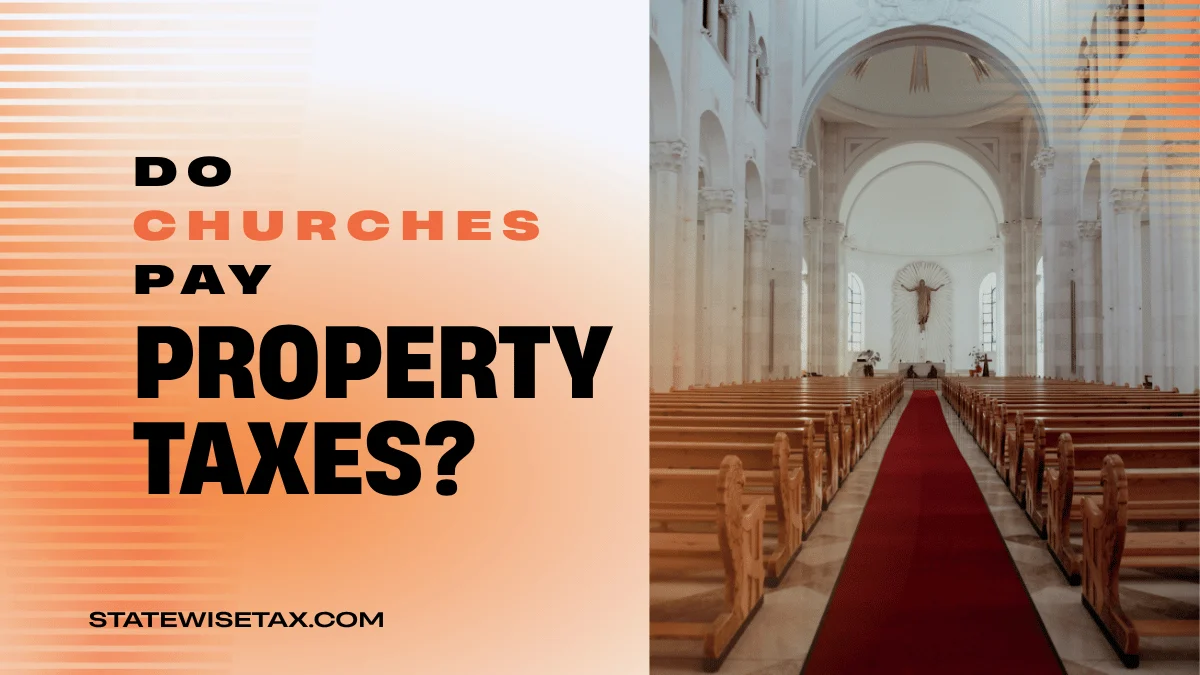

Do churches pay property taxes in the United States? For property used directly for religious worship, the answer is almost always no. Every state offers some form of property tax exemption for churches, temples, mosques, and other religious organizations, provided the property serves a religious, educational, or charitable purpose. This exemption traces back to long-standing tax policy that treats religious institutions like other nonprofits, not to any special religious privilege written into the tax code.
This article explains the legal basis for the exemption, when churches actually do pay property taxes, and how the rules differ across states.
Quick Answer: Do churches pay property taxes? Usually no. Most US states exempt property owned by religious organizations and used for worship, education, or charity. Property used for unrelated business, like rental housing or commercial ventures, can still lose that exemption and owe tax.
Also Read: Can You Go to Jail for Not Paying Taxes?
The Legal Basis for Church Property Tax Exemption
Religious property tax exemptions exist at the state level, not the federal level. Federal law grants churches automatic tax-exempt status under Internal Revenue Code Section 501(c)(3), but that status covers income tax, not local property tax. Each state legislature decides its own property tax exemption rules, and most extend the same treatment given to charities, hospitals, and educational nonprofits.
The core reasoning behind these laws rests on a few points:
- Churches provide community services like food banks, counseling, and shelter that reduce demand on public assistance.
- Taxing religious property could be seen as government interference in religious practice.
- Nonprofit organizations broadly receive property tax relief because they don’t generate profit for owners.
- Long-standing legal precedent, including the 1970 Supreme Court case Walz v. Tax Commission of the City of New York, upheld these exemptions as constitutional.
Do Churches Pay Property Taxes? The Direct Answer
No, in most cases, as long as the property is used for religious, educational, or charitable purposes. Do churches pay property taxes on their main sanctuary, parsonage, or attached school? Generally not, since these uses fall squarely within the exemption criteria every state applies.
The exemption is not automatic in every scenario. It typically requires:
- The property owner is a legally recognized religious organization
- The property is used primarily for worship, religious education, or related nonprofit activity
- The organization files for exempt status with the local tax assessor
- The property is not used to generate unrelated business income
Miss any of these conditions, and the exemption can be reduced, partially applied, or denied.
When Churches Do Pay Property Taxes
The exemption has real limits. Here’s where do churches pay property taxes becomes a more complicated answer:
| Property Use | Tax Status |
|---|---|
| Main sanctuary and worship space | Exempt |
| Attached religious school or daycare | Usually exempt |
| Parsonage or clergy housing | Often exempt, varies by state |
| Vacant land held for future construction | Sometimes exempt, sometimes taxed |
| Commercial rental property owned by the church | Taxable |
| Parking lot rented out for public use | Taxable on that portion |
| Church-run gym or event space rented to outside groups | Often taxable |
| Property generating unrelated business income | Taxable |
This table shows the pattern clearly. Do churches pay property taxes on income-generating property unrelated to worship? Yes, in nearly every state, because that property competes directly with taxable private businesses.
State-by-State Differences
Property tax law is set at the state and local level, so exemption rules vary significantly:
- California exempts property used exclusively for religious worship under the “welfare exemption,” but requires annual filings to maintain status.
- Texas grants exemptions for religious organizations but applies strict rules on how much land around a church building qualifies.
- New York exempts real property owned by religious corporations and used for religious purposes, following rules set under the Real Property Tax Law.
- Florida requires the property to be used predominantly for religious purposes and applies partial exemptions if the property has mixed use.
- Ohio exempts “houses used exclusively for public worship” and related grounds, but taxes portions used for non-exempt activities.
Because rules differ by state, a church operating in multiple locations can face different tax treatment for otherwise identical properties.
Steps a Church Takes to Get a Property Tax Exemption
Exemption is never automatic just because an organization is religious. The process generally follows these steps:
- Register as a nonprofit religious organization with the state.
- Confirm 501(c)(3) status with the IRS, even though this covers income tax, not property tax.
- File an exemption application with the county or city tax assessor.
- Provide documentation showing the property’s primary use is religious, educational, or charitable.
- Renew the exemption periodically, since many states require annual or biennial filings.
- Report any change in property use, since converting space to commercial use can trigger a reassessment.
Skipping these steps is one of the most common reasons churches unexpectedly receive a tax bill.
Why This Topic Causes Confusion
Search interest in do churches pay property taxes often spikes after news stories about megachurches, parsonages, or large land holdings. Several factors drive the confusion:
- Some churches own large tracts of land, and only the portion used for religious activity qualifies for exemption.
- Clergy housing rules vary widely, so a parsonage exemption in one state might not apply the same way in another.
- Rental income from unused space is taxable, but many people assume all church-owned property is automatically exempt.
- Local assessors, not the IRS, make property tax decisions, which creates inconsistent enforcement across counties.
Financial Impact of Church Property Tax Exemptions
Estimates from independent research groups suggest religious property exemptions remove billions of dollars in assessed value from local tax rolls each year across the country. Supporters argue this reflects the community value churches provide through charity and social services. Critics argue it shifts a larger tax burden onto other property owners in the same municipality. Both views appear regularly in local budget debates, especially in cities with a high concentration of religious property.
Common Myths About Church Property Taxes
- Myth: Churches never pay any property tax. Reality: Any property used for unrelated commercial purposes can be taxed like private business property.
- Myth: Federal tax-exempt status covers property tax. Reality: 501(c)(3) status applies to income tax, while property tax exemption is a separate state-level process.
- Myth: Once exempt, always exempt. Reality: Many states require periodic renewal, and a change in property use can end the exemption.
- Myth: All religious organizations get identical treatment. Reality: Exemption scope and paperwork requirements differ by state and sometimes by county.
What Happens If a Church Loses Its Exemption
If a local assessor determines a property no longer qualifies, the church may face:
- A reassessment of the property at full market value
- A new tax bill covering the non-exempt portion of the property
- Possible back taxes if the assessor determines the property was misused for a prior period
- An appeal process, which most states allow, to argue the property still meets exemption criteria
Churches that lease part of their building to outside tenants, run a for-profit venture on-site, or leave land undeveloped for long stretches face the highest risk of a partial or full reassessment.
Conclusion
Do churches pay property taxes? For property used in worship, religious education, or related charitable work, the answer is no in nearly every US state. The exemption reflects long-standing nonprofit tax policy, not a unique religious carve-out, and it requires proper registration and periodic renewal to stay in effect.
The exemption has clear limits. Property used for commercial purposes, unrelated business income, or non-religious activity can trigger a real tax bill, just as it would for any other nonprofit. Understanding where the line falls helps explain why some churches pay property tax on part of their land while their sanctuary remains fully exempt.
Frequently Asked Questions
Do churches pay property taxes on parking lots?
It depends on use. A parking lot used exclusively by church members during worship typically stays exempt. If the church rents the lot to the public for daily parking fees, that portion often becomes taxable, since it generates unrelated business income separate from religious activity.
Do churches pay property taxes on land they aren’t using yet?
Often yes, in many states. Vacant land held for future construction doesn’t always meet the “primary religious use” test required for exemption. Some states grant a grace period during active construction, but rules vary, so churches should confirm status with their local assessor.
Do churches pay property taxes on a pastor’s house?
It depends on the state. Many states exempt a parsonage if the church owns it and the clergy member lives there as part of their role. Some states cap the exempt acreage or value, and a privately owned clergy home typically doesn’t qualify at all.
Are church-run schools exempt from property tax too?
Yes, in most cases. Schools operated by a church for religious education generally qualify under the same nonprofit and religious-use exemptions as the main worship space. The school must be run by the religious organization itself, not leased to an unrelated private operator.
Does a church have to reapply for its property tax exemption every year?
It depends on the state. Some states grant a one-time exemption that continues automatically unless property use changes. Others require annual or biennial renewal filings with documentation proving the property still serves a qualifying religious or charitable purpose.
Can a nonreligious nonprofit get the same property tax exemption as a church?
Yes, generally. Most states extend similar property tax exemptions to charities, hospitals, and educational nonprofits, not just religious organizations. The requirement is usually about nonprofit status and qualifying use, such as charitable or educational activity, rather than religion specifically.
Leave a Comment